You are offline. Reconnect before sending a form.
FAQs
Before you fly
Visas and entry
- 90 days visa-free: UK, US, Canadian, Saudi, Emirati and Malaysian passports, and most EU passports.
- 30 days visa-free: Turkish passports and a few EU ones. Some EU passports need a visa.
- Online ETA: Indian and Indonesian passports.
- Visa before travel: Pakistani passports, including a transit visa to change planes.
- Your passport: valid for at least 30 days after you leave South Africa, with two blank pages.
Visas are never issued at the border. Rules change, so check with the nearest South African mission before you buy a non-refundable ticket.
When to come
- Late October and early November is spring: flowers still out, whales along the False Bay coast and none of the December crowds. This is when our tours run.
- November to March is warm and dry, with long days and some windy afternoons.
- June to August is wet and green, with lower hotel prices.
- Ramadan 2027 falls in February and March. Expect boeber on the fifteenth night, and the Waterfront and Bo-Kaap busy after Taraweeh.
Health, vaccinations and insurance
- Yellow fever: you need a vaccination certificate only if you arrive from a country with a risk of yellow fever, or spend more than 12 hours in transit through one. Children under one are exempt. TravelHealthPro lists the current requirements.
- Insurance: private medical care in South Africa is of a very high standard and can be expensive. Buy travel insurance that covers treatment and medical evacuation.
- Medicines: there are pharmacies across the country. If you take regular medication, bring enough for the trip. A repeat needs a prescription from a doctor in South Africa.
Plug adaptors, water and sun
Bring a plug adaptor. South African sockets are unusual, and UK and US plugs do not fit them.
- The socket: Type M, with three large round pins, at 230 volts. Newer buildings also have Type N sockets, which take a two-pin European plug.
- From the UK: an example of a UK to Type M adaptor.
- From the US: an example of a US to Type M adaptor. An adaptor does not change the voltage, so check the label on your device reads 100 to 240 V.
- These two are examples, to show you what to look for. We have not tested them and earn nothing from the links.
- Water: tap water in Cape Town is safe to drink.
- Sun: wear sun cream and a hat in summer, even when it is windy.
Getting online: eSIM or SIM
- eSIM: Airalo sells South African eSIMs on Cell C and Vodacom, from R66.50 for 1 GB over 3 days. Install it before you fly.
- Physical SIM: SIM cards are sold at the airport, where Vodacom and the other networks have counters.
- Bring your passport. Every South African SIM must be registered under RICA, which needs your original passport and proof of address. Ask the counter what it accepts for a hotel stay.
Getting around
Leaving the airport: Uber or Bolt only
Do not use the taxi services at the airport, even if they look official. Order an Uber or a Bolt on your own app. This is our firmest advice, from living here. In the app you see the driver, the car and the fare before you get in.
- Say no to anyone who approaches you in arrivals offering a ride, including anyone who says they are your Uber driver.
- Order the ride yourself in the app, then walk to the e-hailing pickup at Parkade 2.
- Match the number plate, car and driver's photo against the app before you get in.
- Expect to pay roughly R200 to R350 to the city centre or the V&A Waterfront, and more at busy times.
- A transfer arranged by your hotel is the other safe choice.
Getting around: Uber, Bolt and the red bus
- Uber and Bolt both serve Cape Town, and Uber runs 24 hours. For most visitors they are the simplest way to get about.
- Every ride: book it in the app, wait indoors until the car arrives, and match the plate, car and driver's photo before getting in.
- The red hop-on hop-off bus covers the sights.
- A hire car makes sense for the peninsula, the penguins and Babylonstoren.
- The airport is about twenty minutes from the centre without traffic.
Hiring a car at the airport
- Where: nine rental firms, Avis Budget, Hertz, Europcar and First Car Rental among them, share a facility in front of the Transport Plaza. A pedestrian subway links it to the terminal.
- Bring: your passport, your licence and a credit card in the main driver's name.
- Licence: Avis accepts a foreign licence that is in English and carries a photo or passport number and a signature.
- Driving: South Africa drives on the left. Request an automatic when you book.
- Leaving the airport: stay on the airport approach road and the N2 into town, and ignore any sat nav route that takes you off the main roads.
Chapman's Peak Drive
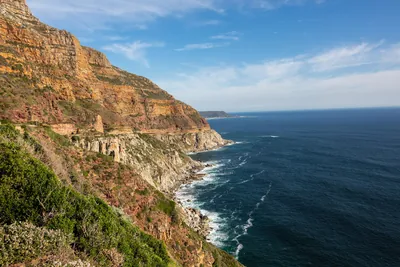
- The road: 9 kilometres and 114 bends between Hout Bay and Noordhoek, with three picnic areas.
- Toll, as last listed: R68 for a light vehicle, R21 for a minibus taxi and R276 for a two-axle bus.
- Buses may travel from Hout Bay to Noordhoek only.
- Closures: high wind, heavy rain, maintenance or rock clearing can shut the road. Check the current tariff and road status before setting out.
While you are here
Money, cards and tipping
Cards and tap to pay work almost everywhere, so avoid carrying a lot of cash.
- Cards: all major credit cards are accepted, Visa and Mastercard especially. Apple Pay works wherever the contactless symbol appears.
- Cash: R200 to R300 in small notes is enough, for car guards, market stalls and the smaller takeaways.
- ATMs: cover your PIN and turn down any stranger who offers to help.
- Tipping: Tip 10 to 20 per cent in restaurants and for guides where service is not already added, and R1 to R5 for the car guard.
- The rand: in early September 2026 a pound bought about R21.65 and a dollar about R16.16. Card rates will differ.
Staying safe
Cape Town needs the same care as any big city, and a little more after dark.
On the street
- Keep your phone in a pocket or bag while you walk. Step into a shop or café to check a map or order a ride.
- Leave your passport, spare cards and expensive jewellery at the hotel. Anything you do carry can be replaced, so never argue over it.
After dark
- Take an Uber or Bolt door to door, even for a short distance, and wait indoors until the car arrives.
In a car
- Leave nothing visible in a parked car. Put bags in the boot before you set off.
- Keep doors locked and windows closed at traffic lights.
- Stay on main roads, and ignore a sat nav shortcut through an area you do not know.
On the mountain
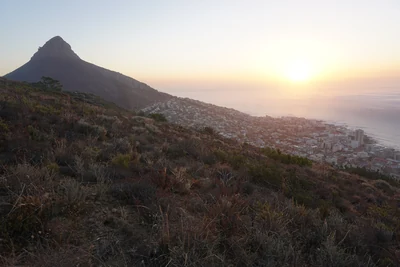
- Hike Lion's Head, Signal Hill and Table Mountain in daylight, in a group of four or more, on the busy marked trails. Weekends are the best days for it.
What is normal
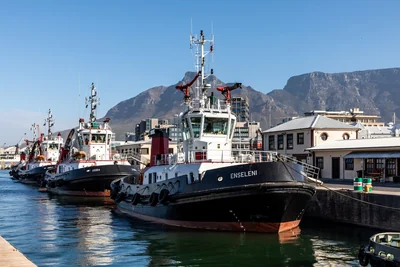
- Bo-Kaap, the V&A Waterfront, Sea Point and the southern suburbs are busy and well used by day.
- Car guards watch parked cars for a small tip. They are part of daily life here.
- People here are quick to help. Ask your hotel, your guide or us about anywhere you are unsure of.
Emergency numbers
- 112 from any mobile, free, for any emergency.
- 10111 for the police.
- 10177 for an ambulance.
- 021 480 7700 for the City of Cape Town's emergency line. From a foreign SIM, dial +27 21 480 7700.
Save them before you land, along with your hotel's front desk and your travel insurer's helpline.
Power cuts
South Africa's scheduled power cuts, called load-shedding, have been rare since 2024. If a schedule is announced while you are here, the EskomSePush app shows it by suburb, and your hotel can tell you whether it has backup power.
Prayer and food
Prayer times, qibla and mosques
You’re never far from a mosque. Find prayer times for your day in Cape Town and confirm with your local masjid.
- Qibla: roughly north-north-east, about 23 degrees east of north.
- Bo-Kaap: the Auwal Masjid on Dorp Street, Nurul Islam on Buitengracht and the Queen Victoria (Jamia) Mosque on Chiappini Street.
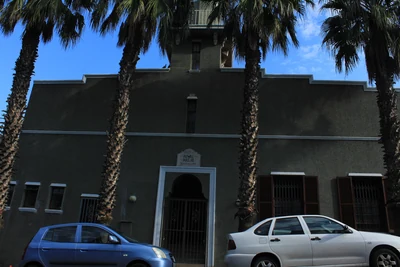
- Long Street: the Palm Tree Mosque of 1807.
- V&A Waterfront: a prayer room for men and women, open 24 hours, with Jumu'ah.
- Southern suburbs: Claremont Main Road Mosque.
- Aquila: a salah room with wudhu on the reserve.
Prayer on the peninsula
- Near Muizenberg: Masjidul-Hudaa, in Capricorn.
- Above Kalk Bay: Masjidul Jaamia.
- Simon's Town: Noorul Islam Mosque.
- Ocean View: a second Noorul Islam Mosque.
- Hout Bay: Masjidul Bahrayn.
Confirm Jumu'ah times with the masjid before travelling.
Eating halal
Halal food is easy to find in Cape Town, from Cape Malay kitchens to family restaurants and takeaways.
- Certificates: the certifying bodies are MJC Halaal Trust, SANHA and ICSA. Ask to see a current certificate if that matters to your choice.
- None of them certifies premises that sell alcohol.
- Arrangements change, so confirm on the day.
- Find somewhere to eat, by neighbourhood.