Kramats of the Cape · Habibia, Rylands
Moulana Abdul Latief
Led the first Jumu'ah on the Cape Flats in 1904 and built the Habibia mosque and school from a wood and iron shack.
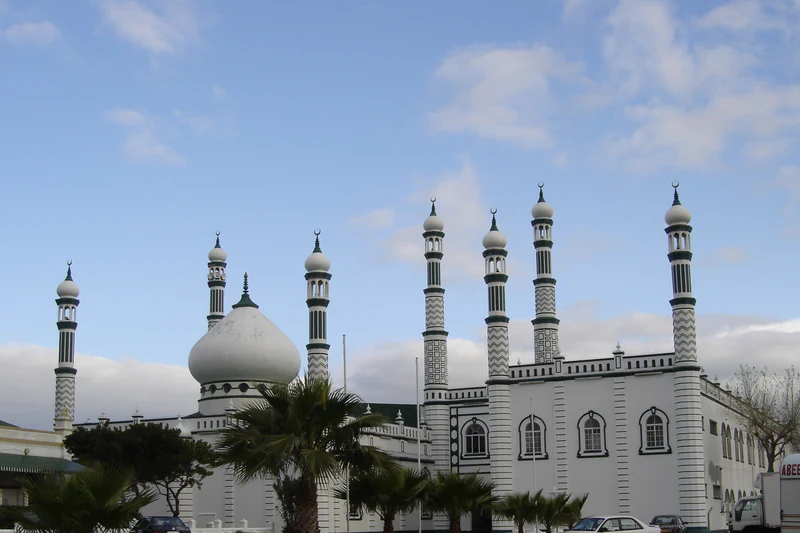
At the end of the 19th century, Muslim traders from India followed the Indian workers brought to Natal for the sugar plantations. Their language and culture were different from those of the Cape Malay community, but their shared faith drew the two together. Moulana Abdul Latief did much to make that happen.
He came to South Africa at the end of the 19th century and worked first as an imam and teacher in the Transvaal, then at the Islamic centre on the Umgeni River in Natal founded by his brother-in-law and spiritual guide, Hazrat Goolam Muhammad Sufi, known as Sufi Saheb. Sufi Saheb bought land at Doornhoogte, on the Cape Flats, and asked Moulana Abdul Latief to build a mosque and centre there.
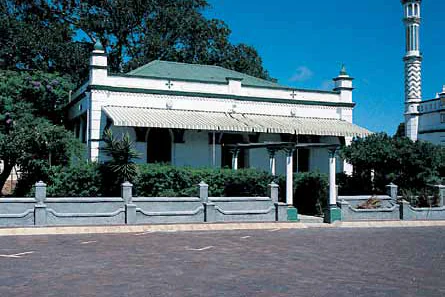
There was no mosque on the Cape Flats then. On his first Friday, in January 1904, he led the first Jumu'ah on the Flats in the open air. A year later the foundation of the Habibia mosque was laid. He lived in a wood and iron shack without running water while the work went on.
He died in 1917 and was buried beside the mosque he built. So many came to his janazah that the mosque could not hold them. The Habibia complex he began now includes a madrasah, schools, an orphanage and a library, and his copy of Dala'il al-Khayrat, a gift from his teacher, is kept there.
Sources: Guide to the Kramats of the Western Cape, Cape Mazaar (Kramat) Society (1996; third impression 2010).