In the circle of the tradition · Faure
Shaykh Yusuf of Makassar
Also remembered as Tuan Yusuf, Abadin Tadia Tjoessoep
Scholar, judge and leader of the resistance in Java, exiled to the Cape in 1694. His household at Zandvliet became the first lasting Muslim community in South Africa.
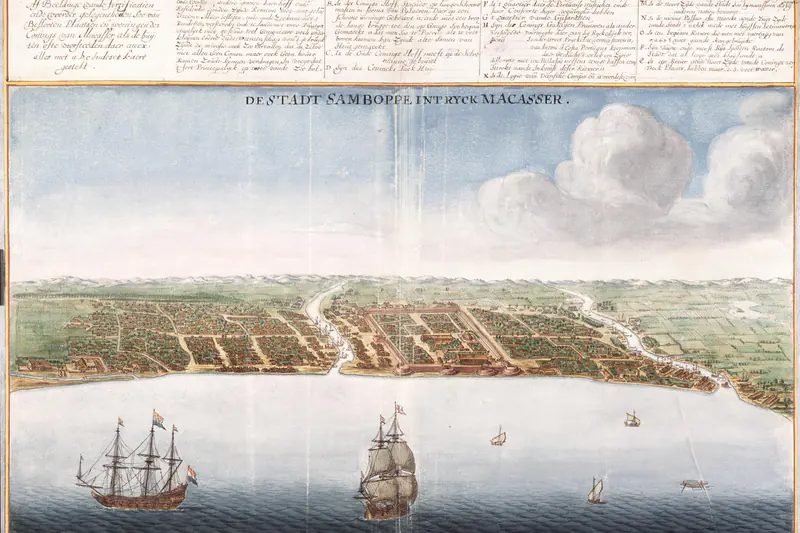
Makassar and Arabia
Shaykh Yusuf was born in Makassar, on the island of Sulawesi in eastern Indonesia, in 1626. He was of noble birth, a nephew on his mother's side of the king of Gowa, and studied in Arabia under several teachers.
In 1664 he sailed from Jeddah to Banten in West Java. He would never see Makassar again. Sultan Ageng of Banten gave him his daughter in marriage and made him his chief religious judge and personal adviser.
War in Java
In 1680 the sultan's son, Pangeran Haji, rose against his father, and the Dutch at Batavia came to the son's aid. In 1683 Sultan Ageng was defeated and escaped with a party of about 5,000, among them 1,300 soldiers, the 57-year-old Shaykh Yusuf and the sultan's sons Purbaya and Kidul. Many of their followers starved rather than surrender.
When Sultan Ageng was captured, Shaykh Yusuf and Prince Purbaya fought on. In September 1683 he was wounded in battle and escaped again, until his company was reduced to 24, most of them scholars, and four women. In 1684 he surrendered on a promise of pardon. The Dutch did not keep it.
Ceylon, and the voyage south
He was held first in the castle at Batavia and in September 1684 moved to Colombo in Ceylon, now Sri Lanka. By then he was revered for his resistance. When the king of Gowa asked for his release, the Dutch refused, and fearing a rescue, sent him further away, to the Cape of Good Hope.
A story from the voyage is still told with pride. When the ship's fresh water ran out, far from land, Shaykh Yusuf put his foot in the sea and told the crew to lower the casks at that spot. The water they drew up was fresh.
Zandvliet
He arrived at the Cape on 2 April 1694 on the Voetboeg, with 49 companions. The governor, Simon van der Stel, received him with honour, but the Company wanted him far from Cape Town and settled his household on the farm Zandvliet, near the mouth of the Eerste River, in the area now called Macassar. He received an allowance of 12 rix-dollars for the support of his party.
Zandvliet soon became a refuge for people escaping slavery, and it was here that the first lasting Muslim community in South Africa took shape. From this isolated settlement the message of Islam reached the enslaved people of Cape Town.
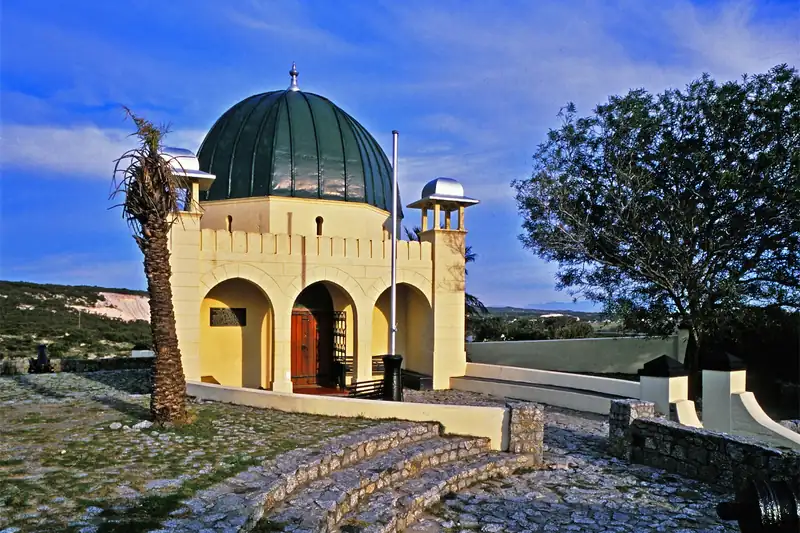
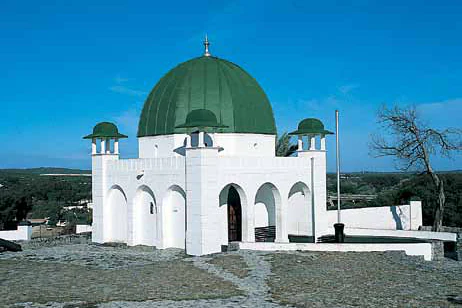
Shaykh Yusuf died on 23 May 1699 and was buried on the hill overlooking Macassar at Faure. A shrine was built over his grave and has been rebuilt and renewed over the years. It is the most widely known of the kramats.
Sources: Guide to the Kramats of the Western Cape, Cape Mazaar (Kramat) Society (1996; third impression 2010); Government Gazette 45602, 3 December 2021: SAHRA declaration of ten kramats; South African History Online: the circle of kramats.