In the circle of the tradition · Oudekraal
Sheikh Noorul Mubeen
Banished in 1716 and held on Robben Island, he reached the mountainside above Oudekraal and taught the fishermen of the coast at night.

From the island to the mountain
Sheikh Noorul Mubeen was banished to the Cape in 1716 and held on Robben Island. How he left the island is told in more than one way. In one account he escaped by means no one could explain. In another he swam the cold Atlantic to the mainland, and in a third he walked across it.
In the account in which he swam, enslaved fishermen found him exhausted on the shore, nursed him back to health and hid him on the mountainside above Oudekraal, bringing him what he needed. They soon saw that he was a man of learning and began to take lessons from him. He became their imam and counselled them through hard times. In the other accounts he made his home on the mountainside and taught the enslaved people of the nearby estates, mostly at night. From his refuge he could watch for danger, with the peaks of the Twelve Apostles above him and Lion's Head along the coast.
The kramat
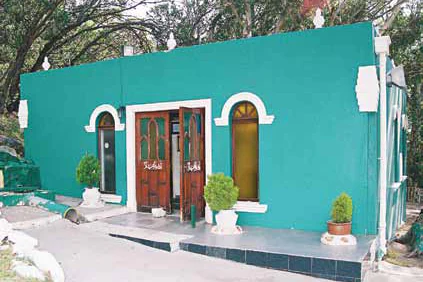
When he died he was buried where he had most often prayed. A structure of wood and iron was first built around the grave. Today a simple tomb stands beside a mountain stream, reached by 99 steps up the slope from Victoria Road. Across the stream, another set of steps leads to a second grave higher up. Some believe it is the grave of his wife, and others of one of his followers. It is honoured as the resting place of a holy person too.
Of the awliya buried on the slopes above the Atlantic, he is the best known. Sayed Moegsien bin Alawie al-Aidarus, who came to the Cape in 1909, is remembered for identifying it.
A story still told today describes a rider on a white horse who comes across the sea from Robben Island at about midday, to take lessons from his teacher.
Visitors describe the place as quiet, a spot for reflection above the noise of the city.

Sources: Guide to the Kramats of the Western Cape, Cape Mazaar (Kramat) Society (1996; third impression 2010); Government Gazette 45602, 3 December 2021: SAHRA declaration of ten kramats; South African History Online: the circle of kramats.