In the circle of the tradition · Tana Baru
Tuan Guru
Also remembered as Imam Abdullah ibn Kadi Abdus Salaam
A prince of Tidore who wrote out the Qur'an from memory on Robben Island, then opened the Cape's first madrasah and led its first mosque.
A prince from the spice islands
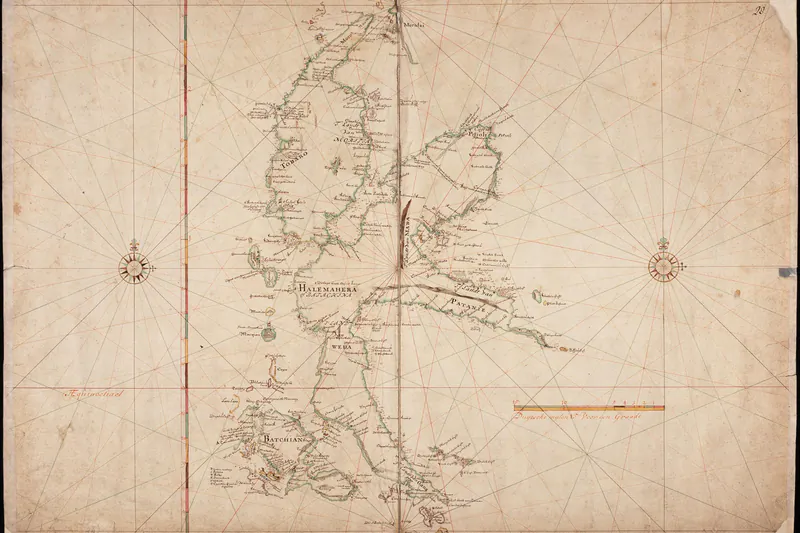
Imam Abdullah ibn Kadi Abdus Salaam was a prince of Tidore, one of the spice islands of the Moluccas in eastern Indonesia. His family traced its descent to the Sultanate of Morocco.
On 6 April 1780 the Dutch brought him to the Cape as a state prisoner, together with Callie Abdul Rauf, Noro Imam and Badroedien. The records suggest they were accused of conspiring with the English against the Dutch East India Company. All four were held on Robben Island, where Callie Abdul Rauf and Badroedien died.
The Qur'an from memory
During his imprisonment Tuan Guru wrote out several copies of the Qur'an from memory. In 1781 he completed Ma'rifat al-Islam wa'l-Iman, a book of fiqh and belief. His handwritten works became the main reference for the Cape's Muslims through the 19th century, and one of his Qur'an copies is kept at the Auwal Masjid today.
The teacher of Dorp Street
Released in 1793, he settled in Dorp Street, then the main street of Muslim Cape Town. There he married Ka'ieja van de Kaap, and they had two sons, Abdul Rakiep and Abdul Rauf.
His first concern was teaching. In 1793 he opened a madrasah in Dorp Street for the children of free Black families and of enslaved people from the East, starting with reading and writing Arabic. The name by which the Cape remembers him comes from this work: in Malay, Tuan Guru means Mister Teacher. Other imams followed his example, and by 1832 twelve madaris were teaching in Cape Town.
A place to pray
He also wanted a mosque. His application for a site was refused, so he led Jumu'ah in the open air, in a disused quarry in Chiappini Street. In 1794 the Auwal Masjid opened in Dorp Street, on property bought by Coridon van Ceylon, a free Black Muslim, and Tuan Guru became its first imam. It was the first mosque in South Africa.
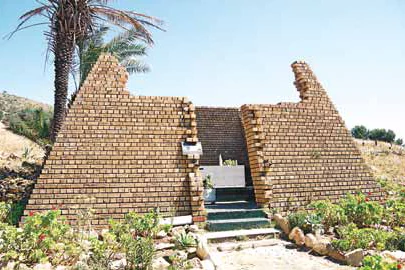
Tuan Guru died in 1807 and was buried at Tana Baru. By then the madrasah and the mosque in Dorp Street were both thriving, and he had named his friend Sayed Abdul Malik as guardian of his sons.
Tana Baru
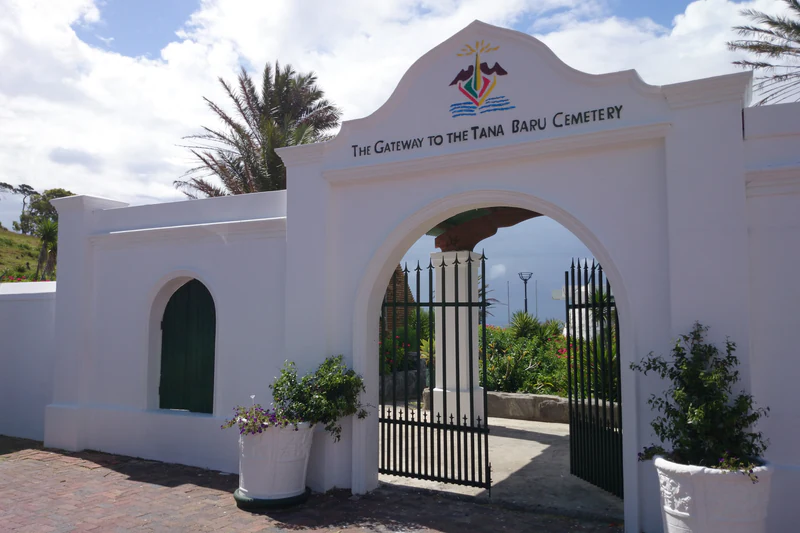
Religious freedom was proclaimed at the Cape on 25 July 1804, and on 2 October 1805 the first grant was made of the ground at Tana Baru, on the slope above Bo-Kaap at the top of Longmarket Street, as a Muslim burial ground. When the authorities closed it on 15 January 1886, about 3,000 people carried a child there for burial two days later, in defiance of the order. Abu Bakr Effendi, whose Bayan al-Din of 1877 set Afrikaans down in Arabic script, is buried here too.
Sources: Guide to the Kramats of the Western Cape, Cape Mazaar (Kramat) Society (1996; third impression 2010); Auwal Masjid; South African History Online: Tana Baru.